


A kitchen usually reaches its breaking point when storage stops working, appliances don’t line up, or daily movement feels cramped. We carry out custom kitchen furniture installation as a defined service, with a clear scope and price, focused on cabinets, islands, and work surfaces that fit the real space—not drawings.
This work runs in two equal scenarios. As a standalone job, we replace or add kitchen furniture without touching walls or services, provided the existing conditions allow accurate fitting. As part of a renovation, the same furniture becomes dependent on floor levels, finished wall thickness, and service positioning. The service stays the same; the sequence changes. Conditions decide the outcome.
When measurements are taken from finished reference points, cabinet lines stay straight, doors remain aligned, and joints don’t open after use. When they’re guessed early, corrections follow. That cause-and-effect is why kitchen furniture sits naturally inside a wider construction context, yet works cleanly on its own when the room is stable.
Malaga Renovation executes this service directly, from site check to installation, balancing standalone upgrades and renovation workflows without mixing scopes. The goal is simple: furniture that works long after installation.

Custom Kitchen Cabinets
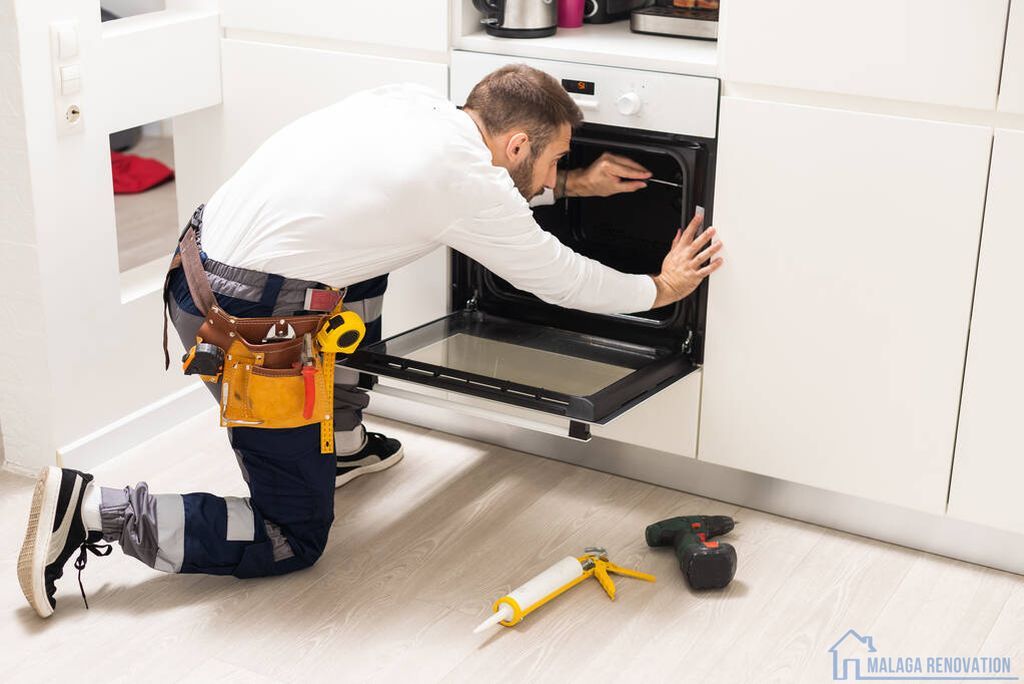
A kitchen that looks “fine” on paper often fails on day one: doors hit the fridge line, drawers clash with the dishwasher, and corner access turns into wasted storage. We build and install custom kitchen cabinets as a standalone job in apartments, villas, and rental properties across the Costa del Sol when the room layout stays, but the furniture no longer works in daily use.
In most cases, cabinet work is requested without any wider construction planned, and the conditions decide the outcome: wall straightness, floor level, and the real positions of water and power. We set cabinet lines from the highest point of the floor, then adjust plinths and scribe panels so gaps don’t open later. That setup step is what keeps doors aligned after months of constant opening and closing. Fewer adjustments later.
When cabinet installation follows renovation works—such as within a house renovation company marbella scope—the sequence shifts, but the logic stays intact. Finished wall build-up, exact tile thickness, and final appliance positions must be confirmed before fabrication. If those inputs arrive late, cabinet price increases because on-site trimming replaces controlled workshop fitting.
Kitchen Island Construction
An island is usually requested after living with a cramped prep zone or chasing sockets across the wall during cooking. We carry out kitchen island construction as a standalone build when the kitchen already functions and the need is limited to more worktop space, seating, or storage without stripping the room back.
Clearances and services decide whether an island improves the room or blocks it. We check walking distances, appliance door swings, and real circulation paths instead of relying on plan drawings. Adding a hob or sink changes the conditions again: waste fall, venting routes, and pump noise all come into play. Miss that stage and the result is slow drainage or constant vibration.
When island construction takes place after broader works—such as within a full home renovation malaga—earlier decisions become visible. Floor levels, tile lines, and lighting drops must already be resolved, otherwise corrections land on the island install itself. That’s why island builds often follow renovation logic, yet remain a clean standalone upgrade when the surrounding structure is already stable. The room decides the order.

Personalized Countertops
Countertops usually get replaced after chips, swollen joints, or stains that never fully clean out—especially in busy family kitchens and short-term rentals. We supply and fit personalized countertops as a standalone service when cabinets remain sound but the work surface has reached the end of its life.
Material choice is driven by use, not presentation. Quartz resists staining but needs correct support at spans, granite depends on proper sealing habits, and wood reacts to humidity and sink cut-outs. We template, cut, and fit, but the site conditions determine whether joints stay tight or moisture finds its way into the carcass.
When countertops are fitted after renovation works, they become part of the final tolerance layer. Wall finishes, backsplash thickness, appliance swaps, and even late plaster corrections affect the final line. We align the worktop to finished surfaces rather than early measurements, which is why countertop fitting often follows a complete home renovation fuengirola, yet stays straightforward when the kitchen shell is already complete. Site reality comes first.
Older coastal properties often hide uneven floors and out-of-square corners behind skirting and bulky units. Cabinet and countertop work is commonly requested on its own to correct those issues, and it also integrates smoothly when other trades reshape the room. In broader layout changes, this scope frequently appears alongside property renovation benalmadena and residential renovation mijas planning when kitchens are part of wider adjustments. We adjust the order to the situation, not the quality of the work.
How Kitchen Furniture Fits into the Renovation Flow
Furniture decisions made too late
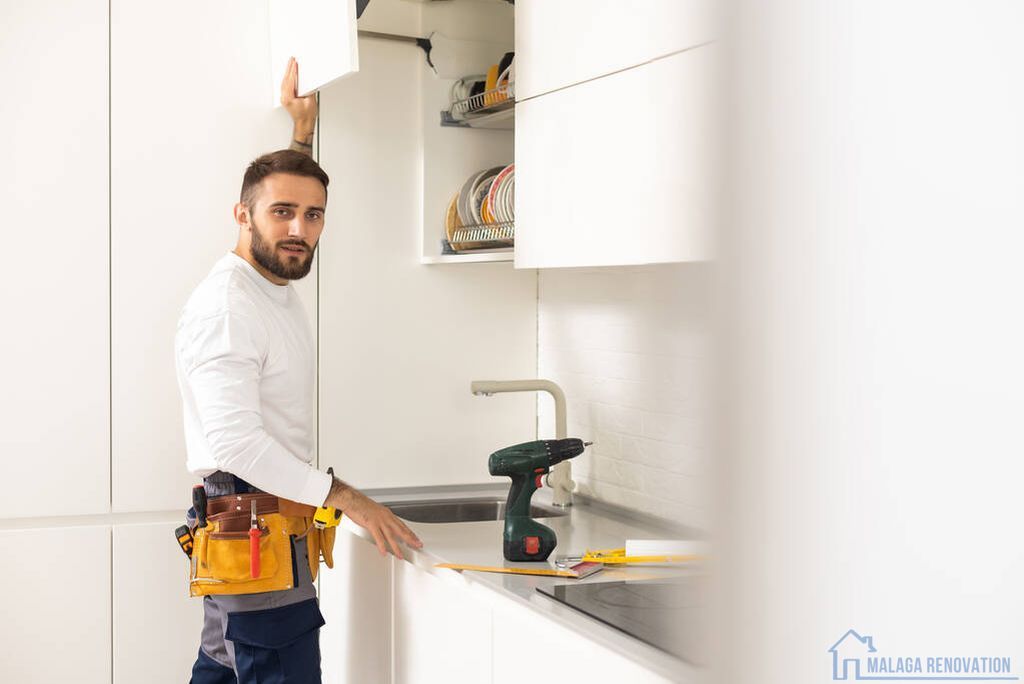
A kitchen often reaches the furniture stage after tiles, plumbing, or electrics are already fixed. That order creates pressure: cabinet depths don’t match pipe routes, appliance gaps shrink, and fillers start multiplying. Choosing custom kitchen furniture earlier—either as a standalone scope or inside a wider renovation—reduces compromises and keeps final dimensions predictable.
Standalone work versus renovation sequencing
In many homes the kitchen structure stays, while furniture changes. That’s where standalone cabinet, island, or countertop work makes sense. In other cases, walls move and services shift, and furniture becomes one step inside a longer chain. Both scenarios share the same intent: correct planning leads to fewer adjustments, which leads to stable fittings that stay aligned years later.
Trades interaction that affects the result
Cabinet performance depends on what happens around it. Plumbing heights, socket placement, and wall finishes all affect how furniture sits and ages. That’s why kitchen furniture work often connects naturally with plumbing services, structural decisions handled by a home builder, and finish tolerances coordinated through carpentry services. Miss one link and the furniture pays the price later.
At this stage, Malaga Renovation treats kitchen furniture as part of a system, not a decorative add-on. The service closes the loop between layout decisions, installation conditions, and daily use. Good alignment today avoids repairs tomorrow.
When design choices lock in long-term use
Layout, access, and material decisions taken during kitchen design define how the kitchen works after handover. A clear sequence—design, services, furniture—leads to drawers that don’t sag, doors that stay square, and surfaces that tolerate real use. That cause-and-effect chain is what turns a finished kitchen into a stable one.
If you’re planning a change, the next step isn’t ordering units. It’s checking conditions: walls, floors, service points, and usage patterns. From there, kitchen furniture can be scoped correctly—either as a focused standalone job or as part of a renovation timeline—without locking you into unnecessary work.
Soft next step: review the existing kitchen layout and note where function fails before choosing finishes or materials. That single step usually saves time, revisions, and cost later.