


Opened ceilings or walls after demolition turn plasterboard installation into a cost-driven decision rather than a decorative one. We carry out plasterboard installation as a paid standalone service and as part of renovation works, depending on structural condition and project stage. Plasterboard installation cost is shaped by access, ceiling height, framing accuracy, and what must be concealed behind the surface. Ignore those factors and the outcome is cracks, uneven joints, or rework later.
Correct sequencing changes the result: electrics first, plasterboard next, final finishes last. In that order, ceilings stay flat and walls accept paint, tiles, or fitted units without correction. This applies to single-room jobs and wider renovation scenarios, including complete home renovation. The service stays the same; only the context shifts. One early decision defines how the space performs for years.
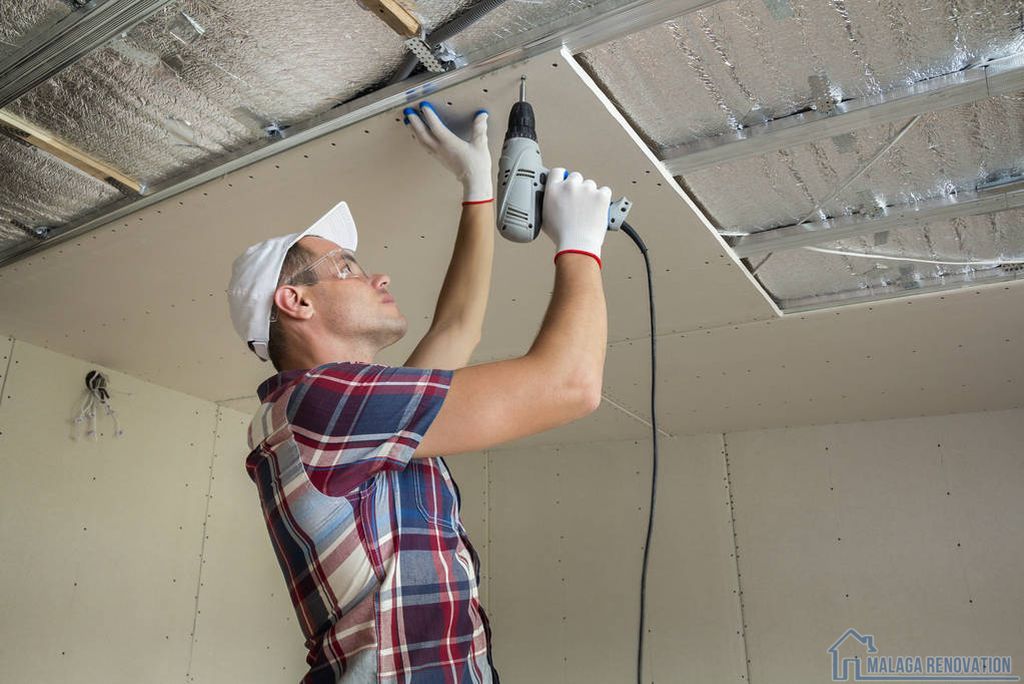
Ceiling Plasterboard Installation
A ceiling opened after demolition or stripped of old panels immediately raises questions about level, lighting points, and budget. Ceiling plasterboard installation is a job we carry out in Marbella and across the Costa del Sol as a standalone call-out, but it also sits inside a wider renovation sequence where electrics, insulation, and room heights must align. Skip that order and fresh boards get cut later. Extra cost. Extra dust.
The ceiling stage starts with setting out the frame, checking drops for spotlights, and controlling joints and screw patterns, because movement shows up overhead first. Uneven slabs or minor structural sag change the result depending on how correction is handled before boards go on. That’s why plasterboard installation cost is never just “materials + labour” — it depends on access, height, frame straightness, and what must be hidden above. For a fast price, we quote after a short site visit and measurements. No guessing.
Wall Plasterboard Installation
Out-of-plumb walls, cracked finishes, or surfaces cut open for cables often make plasterboard the fastest way to rebuild a flat plane without waiting for wet plaster to cure. We install wall plasterboard in apartments, villas, and shop units where speed matters and finishes must stay predictable for tiling, painting, and wardrobes. As a standalone job, this is often one problem wall. In renovation, it follows first-fix electrics and plumbing, before floors and trims.
Moisture risk or visible salt marks change both board selection and fixing method, because the wrong setup leads to swelling at the bottom edge and joint cracks later. Small detail. Big consequence. Where wall build-up affects door frames or window reveals, thickness and beads are planned early so space isn’t lost and rework isn’t triggered. If the project is part of construction and renovation malaga, plasterboard is aligned with the full sequence to avoid clashes between finishes.
Partition Wall Construction
Layout changes like a new bedroom, office corner, or storage zone are usually handled with partition wall construction instead of touching structural concrete. We build plasterboard partitions for residential and commercial interiors, including sound and service cavities where required. This can be a standalone request — one partition with a doorway — or part of a renovation where layout changes drive electrics, sockets, lighting runs, and sometimes HVAC routes.
Load-bearing expectations set limits on how a partition is built, because plasterboard alone won’t hold TVs, kitchen units, or wall-hung vanities. Reinforcement and fixing points are added before closing the wall. Miss that step and anchors loosen, boards crack. In projects linked to building works marbella, partitions are set with floor levels and door swings in mind so flooring thickness and skirting lines don’t fight the new layout.
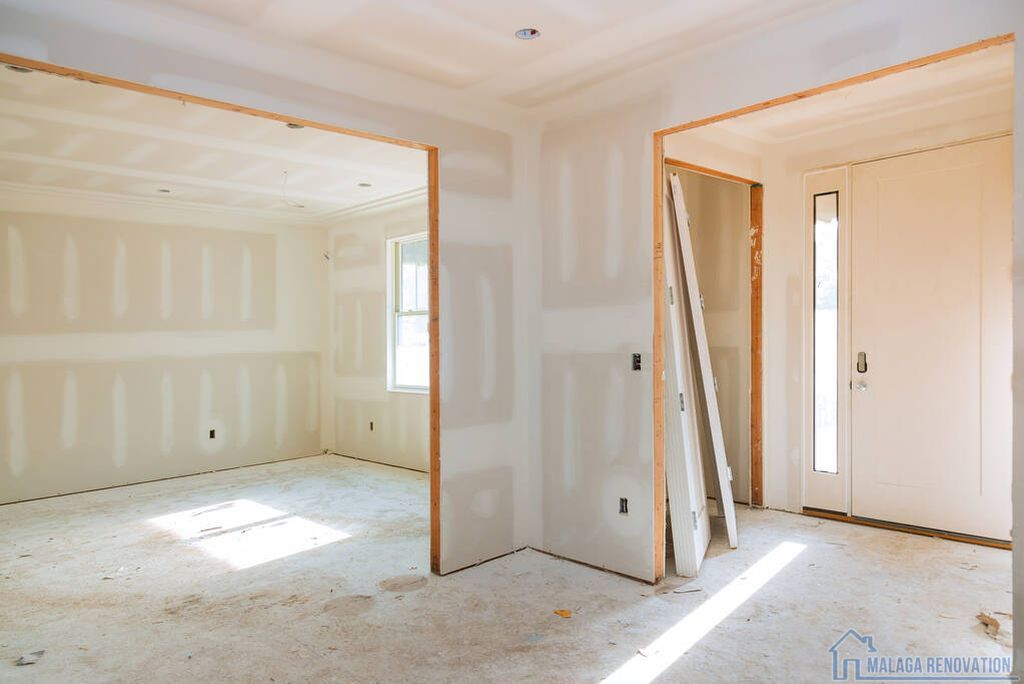
Soundproofing Solutions
Daily noise from neighbours, traffic, or echo in hard-floored rooms usually exposes weak wall and ceiling structures, not a lack of foam panels. We install plasterboard sound reduction systems in bedrooms, home offices, and rental properties where complaints affect comfort or tenancy. As a standalone job, this is often one shared wall. In renovation, it’s combined with insulation and new wiring so walls aren’t opened twice.
Weak points like back-to-back sockets, frame gaps, and ceiling voids decide the outcome more than the visible surface. Treating only what you see rarely works. Build-up thickness, resilient bars, and joint sealing all change the result — and they change plasterboard installation cost because detailing and access take time. Shortcuts here show up fast. Callbacks follow.
Fire-Resistant Plasterboard Installation
Garage connections, boiler rooms, and commercial back areas often require fire-rated linings either by design or simple risk control. We carry out fire-resistant plasterboard installation for ceilings, walls, and partitions where a defined barrier and documented build-up are needed. This can be a standalone upgrade for one room or part of a full renovation where doors, penetrations, and electrical boxes must meet the same standard.
Unsealed penetrations or poorly detailed boxes reduce fire ratings to theory only. The real result depends on correct board types, layer count, fixings, and joint treatment. These areas are planned before boards go up, especially on projects connected to home renovation company fuengirola, where multiple trades overlap and timing controls the outcome.
Moisture-Resistant Plasterboard
Bathrooms, kitchens, and laundry zones demand boards that can handle humidity swings and occasional condensation. We install moisture-resistant plasterboard on walls and ceilings where later finishes rely on stable backing. As a standalone job, this often follows a leak repair or partial replacement. In renovation work, it comes right before waterproofing, tiling, and final paint systems.
Poor extraction or already damp substrates usually cause failures behind the finish, not on the surface. Moisture sources and wall build-up behaviour are checked first, because trapped damp leads to joint damage and mould marks later. Results improve when the order is right: ventilation first, board second, waterproofing where needed, then tiles or paint. On projects tied to house renovation company benalmadena, this step is timed to avoid closing wet areas too early.
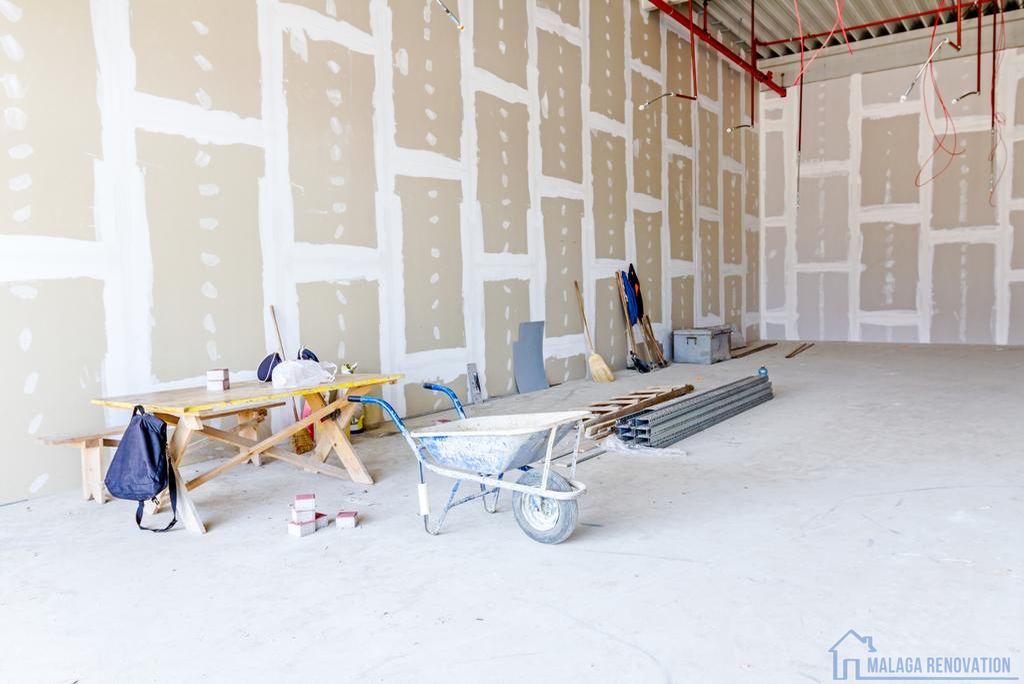
Bulkhead and Cove Installation
Services like ducting, curtain tracks, LED channels, or uneven beam lines are typically hidden using bulkheads and coves. We build these features in living rooms, kitchens, hallways, and commercial ceilings where access still matters. As standalone work, it’s often one room. In renovation, it’s planned early so ceiling drops match cabinetry, doors, and lighting design.
Incorrect allowance for light fitting depths or driver locations usually leads to access holes cut later. That’s how ceilings get messy. Lines are set out first, corners kept straight, and inspection points planned where needed, because shadows and joint stability define the finish. Cost follows geometry and access — simple boxes differ from stepped coves with lighting recesses.
Suspended Ceiling Construction
Lowering a ceiling to run new electrics, improve insulation, or level an uneven slab is handled through suspended ceiling construction. We install suspended plasterboard ceilings in flats with cracked original finishes, villas with outdated lighting layouts, and commercial spaces with services above. As a standalone job, this might be one room. In renovation, it’s paired with rewiring and insulation so the ceiling opens once.
Incorrect hanger spacing or weak framing causes movement, and joints start printing through after a few months. That’s the failure most clients notice. Structure rigidity, drops around doors and windows, and coordination with other trades are checked in advance so plasterboard doesn’t clash with tile heights, wardrobes, or air-conditioning lines. On sequences like full home renovation mijas, timing this step avoids delays and protects finished floors from heavy dust.
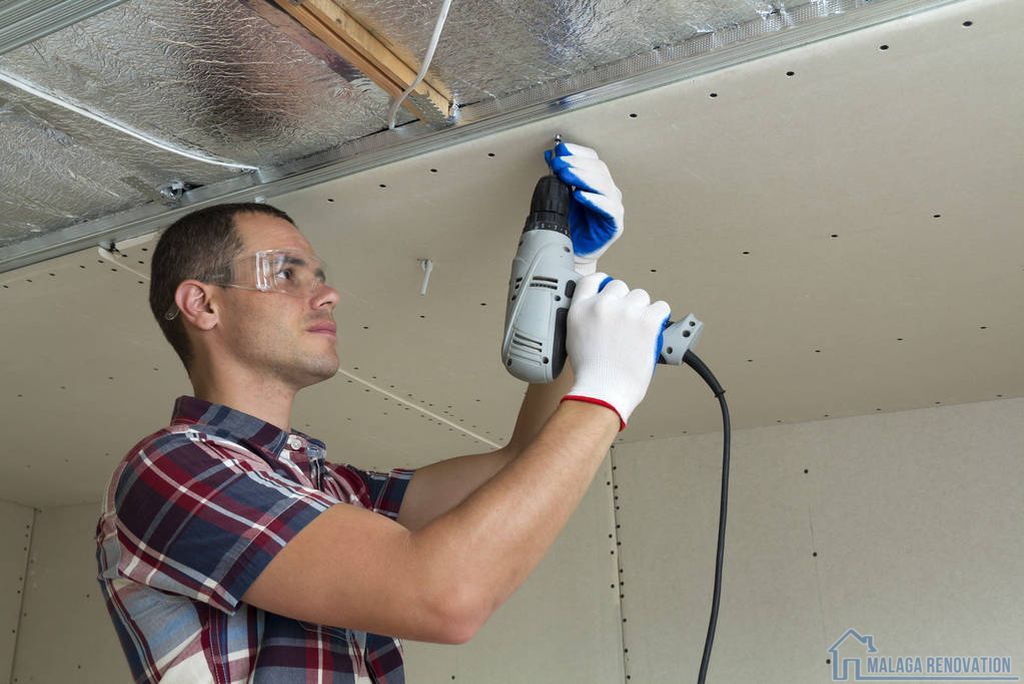
Plasterboard Installation as Part of the Building Logic
When Plasterboard Is Chosen as a Structural Decision
At the stage where surfaces must be closed, plasterboard installation stops being a decorative choice and becomes a structural one. The decision to rebuild ceilings or walls with plasterboard usually comes after wiring, pipe runs, or layout changes, because those hidden elements define where boards can be fixed and how joints behave later. If this step is rushed, the consequence shows up as cracks, uneven lines, or access problems during future maintenance.
A build sequence that accounts for plasterboard early produces predictable surfaces that accept paint, tiles, and fitted furniture without rework. That is why this service works both as a standalone task and as part of larger building works, where timing matters more than speed.
Standalone Work and Renovation Flow in One System
Single-room corrections often trigger plasterboard installation as a standalone job to fix ceilings, straighten walls, or close old damage. The practical outcome depends on how well this isolated work connects to existing finishes, levels, and access points. Done without context, it creates mismatches. Done with checks, it blends in.
Inside a renovation flow, plasterboard connects directly to plastering services, floor levels, and final paint systems. That connection reduces delays and avoids reopening finished areas. One decision influences the next step. The result lasts longer.
Coverage Across Residential and Interior Scenarios
Apartments, villas, and commercial interiors all impose different conditions, but the logic of plasterboard installation stays the same. Ceiling heights, moisture zones, load requirements, and future use define how boards are fixed and finished. Ignoring those conditions leads to repairs later.
Alignment with interior design planning or integration into home building services results in surfaces that support lighting layouts, storage systems, and long-term use without structural compromise.
Cost, Sequence, and Long-Term Outcome
Plasterboard installation cost is driven by more than square metres. Access limits, ceiling drops, integration with other trades, and correction work all influence the outcome. Choosing the right setup at this stage reduces future repairs and protects finished surfaces.
A clear installation sequence leads to long-term stability: joints hold, ceilings stay flat, and later upgrades remain possible without demolition.
For projects involving surface correction or new layout planning, the critical step is reviewing how plasterboard fits into the wider work sequence. Whether handled as a single-room task or part of a renovation, the choice made here defines how everything above and below it performs later.